
-
SPIRITUAL FORMATION
In Pastores Dabo Vobis, Pope John Paul II strongly emphasized that spiritual formation is "the core which unifies and gives life to his being a priest and his acting as a priest" (45). It is the pillar that animates and sustains the other three dimensions of formation — human, intellectual, and pastoral. Without a solid spiritual life grounded in the perennial tradition of the Church, "pastoral formation would be left without foundation" (45). The nurturing of the spiritual life therefore enjoys priority in the total formation process of the seminarian.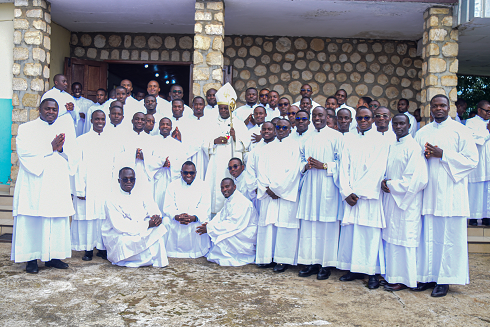
Union with Christ: The Goal of Spiritual Formation
Following Vatican II's Optatam Totius, Pastores Dabo Vobis identifies the goal of spiritual formation as learning "to live in holy, familiar and attentive union with the Father, through his Son Jesus Christ in the Holy Spirit" (no. 8). This means drawing close to Jesus Christ as a friend in every detail of life (cf. PDV, no. 45). Spiritual formation starts with the fundamental call to discipleship and continual conversion — to live in intimate union with the Holy Trinity, always mediated through the Church as the Mystical Body of Christ.
Configuration to Christ the Shepherd
By sacramental consecration, the priest is configured to Jesus Christ as head and shepherd of the Church. By virtue of this consecration brought about by the outpouring of the Spirit in holy orders, the spiritual life of the priest is marked, molded, and characterized by the way of thinking and acting proper to Jesus Christ — summed up in his pastoral charity. Forming future priests in the spirituality of the heart of the Lord means they should lead lives that are a response to the love and affection of Christ the priest and good shepherd: to his love for the Father in the Holy Spirit, and to his love toward humanity that was so great as to lead him to give his life in sacrifice.
Relationship to the Other Pillars
Spiritual formation does not stand alone among the four pillars. As the Holy Father notes in PDV 45, "Human formation leads to and finds its completion in spiritual formation." The Programme of Priestly Formation further specifies: "Spiritual formation informs the other three. Intellectual formation appropriates and understands the other three. Pastoral formation expresses the other three pillars in practice" (PPF 73). The whole formation imparted to candidates for the priesthood aims at preparing them to enter into communion with the charity of Christ the Good Shepherd (cf. PDV 57).
Essential Means of Spiritual Formation
The Church's documents on priestly formation identify several indispensable means by which the seminarian grows in the spiritual life:
The Holy Eucharist stands at the summit of priestly prayer. The prayer of the Church reaches its apex in the Liturgy of the Eucharist, which is "the summit and the source" (Sacrosanctum Concilium, 10). The seminarian must engage this mystery in depth, with solid theological understanding, fidelity to the discipline of the Church, and deep personal experience.
The Liturgy of the Hours is the Church's public, intercessory prayer through which priests extend the sacramental celebration of the mysteries of Christ for the sake of the whole Body of Christ.
Lectio Divina and Scripture meditation nourish the seminarian's prayerful encounter with the Word of God, preparing him to be a credible minister of that Word.
Spiritual Direction is a privileged means of growth in the spiritual life. The guidance and wisdom of a spiritual director can be of enormous assistance, helping the seminarian to discern the movements of the Spirit, grow in self-knowledge, and remain faithful to his vocation.
The Sacrament of Reconciliation, received regularly, fosters ongoing conversion, humility, and the experience of God's mercy — which the priest will in turn extend to others.
Marian Devotion holds a special place in priestly spirituality. Pastores Dabo Vobis concludes by urging priests to renew their devotion to Mary, praying to her, imitating her virtues, and recognizing her as mother and teacher of the Catholic priesthood.
Formation for a Lifetime
Spiritual formation does not end at ordination. A spiritual formation program in the seminary must concern itself not only with the candidate's growth and development while in residence, but also with his continued progress in and faithfulness to the spiritual life after he is ordained and leaves the external supports the seminary offers. As the Programme of Priestly Formation notes: "The final goal of spiritual formation in the seminary is to establish attitudes, habits, and practices in the spiritual life that will continue after ordination." The means of ongoing spiritual formation for priests include spiritual gatherings, priestly associations, and continued spiritual direction (cf. PDV 80–81).